
QR code Blue Plaques for buildings and Red Plaques for people
Our innovative QR code blue and red plaques, which commemorate our most important buildings and people, are printed onto 200mm diameter aluminium discs. The QR codes, which are activated by scanning with a smart phone, link to pages on our website where a host of relevant information can be seen.
You must download a QR code scanner app to your smartphone. There are many available, but the one I use is from http://scan.me
The QR code Heritage Trail provides a wealth of information about Horbury’s most important buildings and people. Special thanks to Helen Bickerdike for her research into the history of these buildings and people.

Buildings and people in our QR code trail
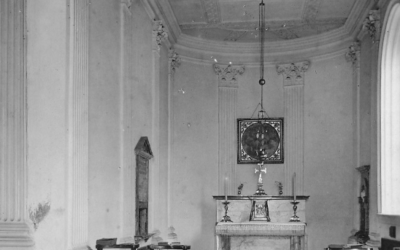
St. Peter’s & St. Leonard’s – the interior
The church of St Peter & St Leonard Introduction Welcome to the Church of St Peter and St Leonard – Horbury’s parish church. Below you will find information about various details of the interior of the building, which you can look up as you walk round and explore...

Civilian gas decontamination chamber
Built in 1939, prior to the outbreak of World War II, this brick built cleansing station was granted Grade 2 listed status in 2019. Historic England described it as one of the best preserved purpose-built centres of its kind in the country. The unit would have been...
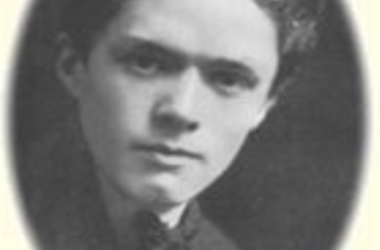
Willian Baines
William Baines was born on the 26th March 1899 and baptised at Horbury Primitive Methodist Chapel on the 30th April that year. He was the son of George William and Mary Alice (nee Townsend). George Baines was organist at the Primitive Methodist Chapel and William...
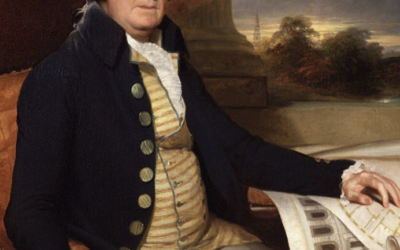
John Carr
John Carr was born in Horbury, the first child of nine, to Rose Lascelles and Robert Carr who during John's childhood lived in a cottage at the end of Northfield Lane. His father was a mason-architect and owned two small quarries. John entered the family business and...
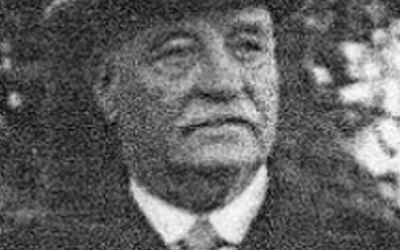
The Horsfield Family
One of Horbury's past industrial giants was Arthur Horsfield, who at one time owned the Iron Works at Horbury Junction. Arthur Horsfield was born on the 4th October 1854, to parents James Wood Horsfield and Jane Eliza (nee Whitehead). He was baptised at Dewsbury...
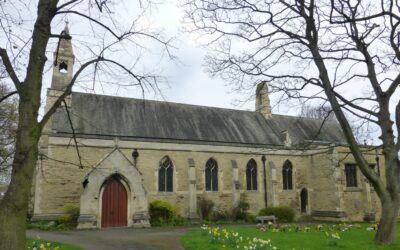
St. Mary’s Church Horbury Junction
Canon John Sharp, vicar of Horbury, reached out to the people of Horbury Junction after he received an offer of £100 from Louisa Goodenough, Mother Superior of the House of Mercy, towards building a mission room there, if he could raise the remainder of the cost. On...
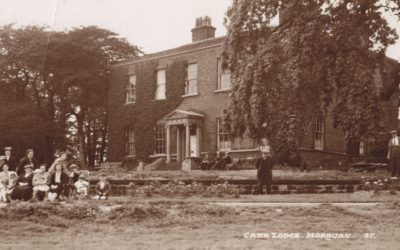
Carr Lodge
This Grade II listed building was built between 1770 and 1775 for John Bayldon and was called originally Sunroyd House or possibly Little Thornes House, because the design is similar to Thornes House in Wakefield. In 1790, the house was conveyed to John Carr, lawyer,...
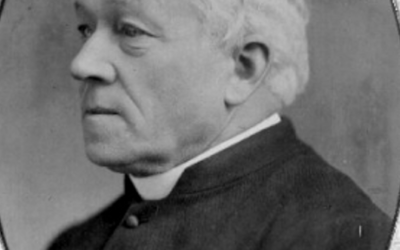
Canon John Sharp
Canon John Sharp Rev Canon John Sharp was the eldest of two sons born to Rev Samuel Sharp and his wife Margaret (nee Alderson). Born on 26th October 1810, John was baptised at All Saints, Wakefield (Wakefield Cathedral) on 7th November. His father Samuel was the vicar...

Bridge End Cornmill
Bridge End Cornmill Bridge End Cornmill was originally owned by Lord Bingley and dates from mid-17th century. It was leased to the Walshaw family who were established millers and was continuously occupied until the mid-19th century. It is one of two corn mills near in...
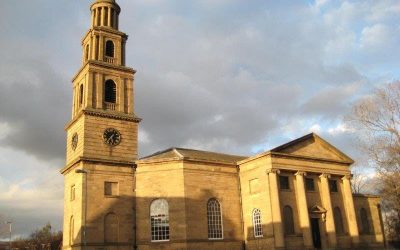
St Peter & St Leonard
The church of St Peter & St Leonard Introduction Welcome to the Church of St Peter and St Leonard – Horbury’s parish church. Below you will find information about various details of the interior of the building, which you can look up as you walk round and explore...
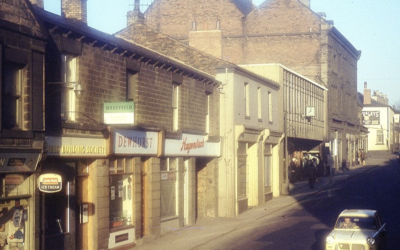
Charles Hagenbach
Many will remember the Wakefield-based bakers Hagenbachs. But did you know that contrary to popular belief the founder Charles Hagenbach originated from Switzerland and that he lived in Horbury? One of the company's many shops was located here. Charles August...
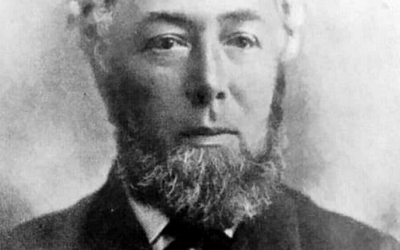
Charles Roberts
Charles Roberts was born in Leeds on the 16th November 1831, the eldest son of Thomas Roberts, a paper stainer and his wife Martha. Originally a joiner, he established the “Buffer and Wagon Works” at Ings Road, Wakefield in 1856 & moved to Horbury Junction in...
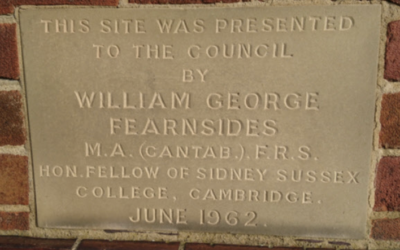
Fearnsides
Joshua Fearnsides, a grocer, married Maria Green in the 4th quarter of 1878 in Wakefield. The 1881 census shows them living at Addingford Hill. They had two sons, William George born 10th November 1879 and Edwin Greaves born 17th June 1883 plus a daughter, Margeurite,...
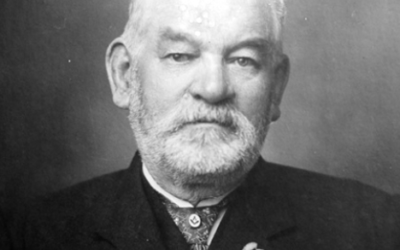
Henry Fallas
Henry Fallas was born in Horbury and baptised on the 24th December 1843. His parents were Joseph and Hannah Fallas (nee Coope) who had married at St Peter's Church on Christmas Day 1834. At the turn of the 20th century Henry Fallas & Sons were Horbury's premier...
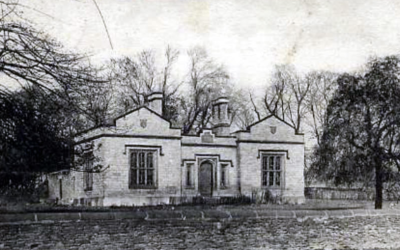
The Gaskell School
The Gaskell School was opened by Daniel Gaskell, first MP for Wakefield from 1832 – 1837 and a member of Wakefield Unitarian Chapel. He devoted much of his life to improving the lot of the less fortunate, in particular the youth of the district. It was an...
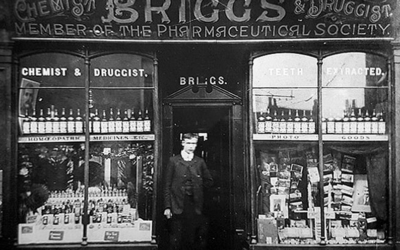
Lee Briggs
Lee and Briggs, Ironmongers, was established in 1913 by Eric Edwin Lee & Edgar Briggs, in premises previously owned by Mr. Albert Teal, a cabinet maker and furniture dealer who was noted locally at the time because he wore a badly fitting wig. The building has...
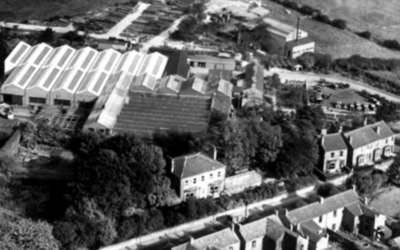
Richard Sutcliffe
Richard Sutcliffe (1849 - 1930) was an Irish-born mining engineer and inventor. He was born at the height of the Irish potato famine on a farm in Co. Tipperary, Ireland on the 26th January 1849, the son of Joseph Sutcliffe and his wife Rachel (nee Deeves), the...
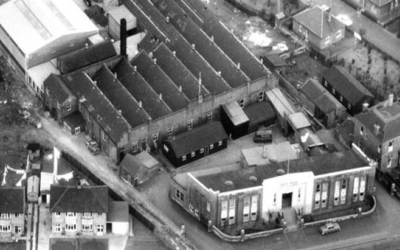
Readicut
Readicut was founded by Ralph Hirst in 1928 from a shop in Wakefield. Their innovation was the brilliant idea of supplying pre-cut wool for rug making. Previously, wool was purchased in skeins and had to be cut to length by the crafter; a quite tedious and...
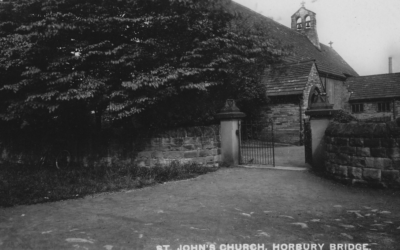
Rev. Sabine Baring Gould
The Rev. Sabine Baring-Gould became curate to the Rev. John Sharp, vicar of Horbury, but was based at Horbury Bridge from 1864 to 1867, when he then relocated to Dalton, near Thirsk. He will always be associated with Horbury Bridge for it was here that he wrote his...
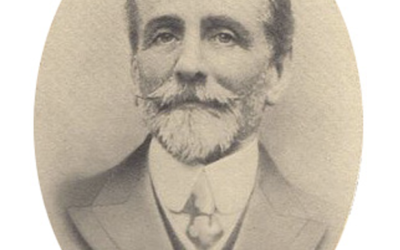
William Sykes
William Sykes, the son of blanket finisher Joseph Sykes and his wife Catharine, was born in Earlsheaton in 1852. In 1874 William married Louisa Abstemia Crabtree of Liversedge and, against the advice of his father, with his own and his new wife's savings, he purchased...
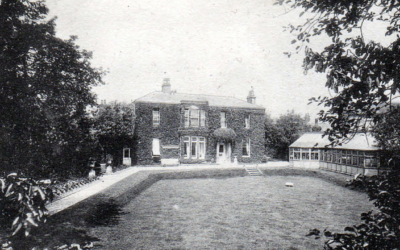
Thomas Edward Green
Thomas Edward Green was born on the 27th March 1862, to parents George Green and Mary (nee Stringer). In the spring of 1895, Thomas Edward married Lillie Miers, in the Wetherby district. Lillie was the daughter of John Miers, oil manufacturer and his wife Jane. The...
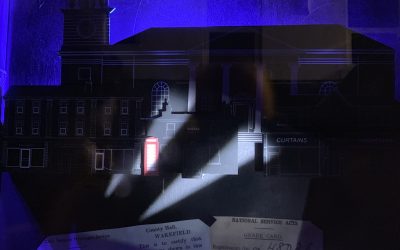
Redbox Gallery
Redbox Gallery occupies a K6 telephone box which the Society purchased from BT for £1. Redbox has a strong curatorial policy which requires all commissioned artists to find a Horbury institution or organisation to engage with, and to concieve a new work inspired by...
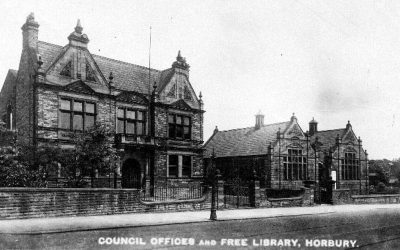
Town Hall
The plot of land on which the Town Hall and Library stand was previously a house and garden occupied by Mr William Thickett, builder. The land and buildings were purchased by Horbury Urban District Council (HUDC) in 1899 from Messrs Baines for 3s 3d per yard (£2,100...
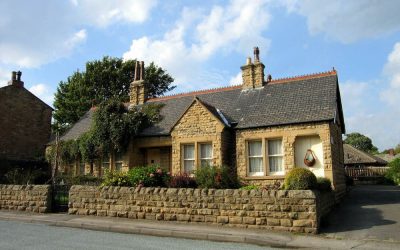
St. Leonard’s Hospital
Next to the Lock up, the buildings named St. Leonard's Hospital are not the first to occupy the site. They were built by Canon John Sharp in 1888 to replace the original almshouse building, which was demolished circa 1887. Canon John Sharp, the Vicar of Horbury raised...
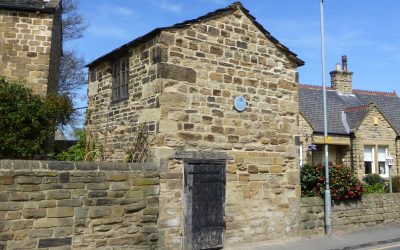
Lock up
Next to the Old Town School this small building, which forms part of the premises is Horbury's old lock-up or "Kidcote" which dates back to 1710. It is a two storey building, the ground floor formerly being used as a prison with only a small stone basin for comfort....
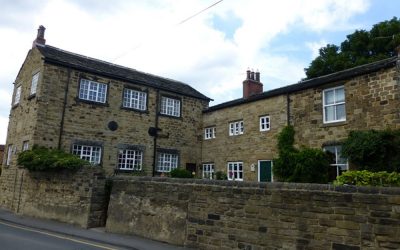
The Old Town School
The Old Town School opposite, marked by a stone plaque in the wall dated 1798, was the first school to be founded in Horbury and dates back to 1708 on land acquired by the Horbury Common Lands Trust for £4. A report dated 1827 shows "10 poor children" being taught and...
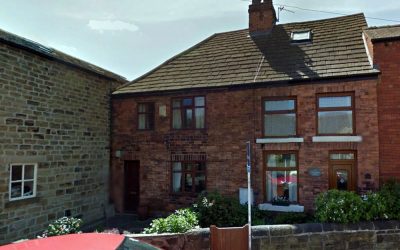
Tithe Barn Street
Tithe Barn Street in Horbury was so named after the old tithe barn, which was used to store produce of the tithe. A tithe means a tenth and one tenth of every Horbury parishioner's income from produce of the land had to be donated to the church & the QR Code...
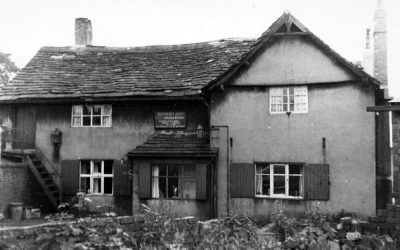
The Shepherd’s Arms
The Shepherds Arms dates back to the 16th century and was originally called Nether Hall. Inside the main building of the Shepherds Arms, there remains some evidence of a small, timber-framed building dated 1538. Historical records show that the building was originally...
The Cricketer’s Arms
The Cricketers Arms was built in 1898 and is a traditional red brick late Victorian/Edwardian style building with a timber framed frontage to the third storey. The pub was served by Melbourne Breweries, Leeds until 1960 when Tetley's bought out Melbourne Brewery and...

The corner of Northgate & Tithe Barn Street
Opposite the church, at the corner of Tithe Barn Street with Northgate, is a group of late 18th Century two-storey brick-built houses with stone slate roofs. The Northgate elevation incorporates a carriage entrance and featured as a corner shop in the film of Stan...
St. Peter & St. Leonard’s Church
The Church of St. Peter and St. Leonard is a Grade I listed building standing in the conservation area of the oldest part of the township of Horbury. It was built by the architect John Carr on the site of a Norman church dedicated to St. Leonard. About 1788/89, John...
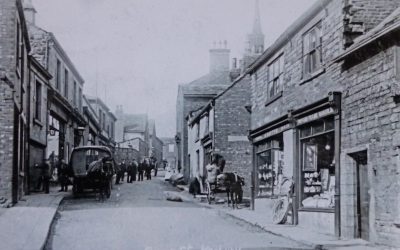
Queen Street
Probably named in honour of Queen Victoria, Queen Street was formerly known as Hodge Lane & Widgery Lane. 'Boon's' public house began life as 'The Woolpacks Inn', licensed in 1800. The shop, now called 'Pinx' was once a butcher's shop & house. The garden area...
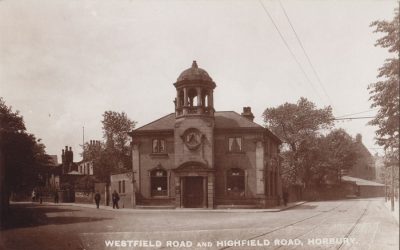
No.2 Highfield Road
Built on the site of Lidgate Mill (worsted), this was originally the 'United Counties Bank', which became a branch of 'Barclay's Bank'. For the past 25 years or so it has been various licensed premises before its current incarnation. To the left of the of this...
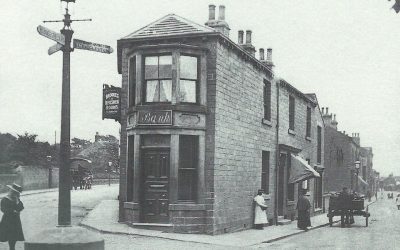
No.1 Cluntergate
The building at the corner of New Road and Cluntergate, once occupied by H. Pullan and Son, makers of bowling green woods was built by G & W Thickett for Mr. William Brooke, painter and decorator in about 1856. His son used the these buildings for his...
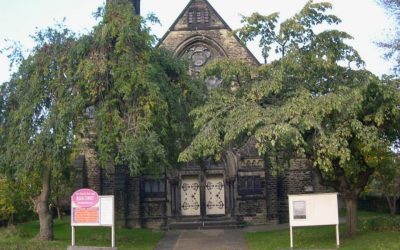
Methodist Chapel
The Methodist Church standing on this site today opened in 2016. It replaced a previous Wesleyan Methodist Chapel, St Paul's (pictured), which opened in 1884 & was demolished in 2012 due to the structure becoming unsafe. St Paul's had also replaced an earlier...
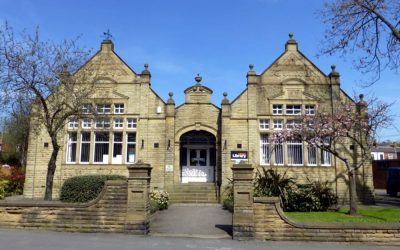
Horbury Library
Built by the local firm Henry Fallas & Sons, who had recently completed the Town Hall next door, the foundation stone was laid by Cllr. A. Horsfield J.P. on the 4th January 1905. A grant of £2,000 had been obtained from the Carnegie Foundation*, which along with...
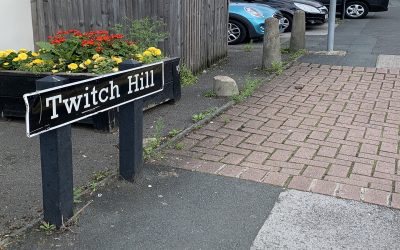
Twitch Hill
It has been suggested Twitch Hill, as in T'Witch Hill, gets it's name from being the place where witches were executed back in the 17th Century. The last execution for witchcraft in England was in 1684, when Alice Molland was hanged in Exeter. However, as colourful as...
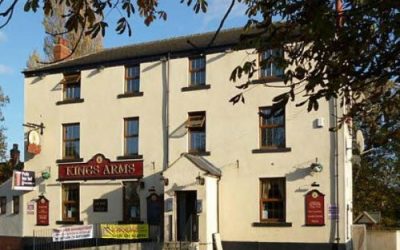
The King’s Arms
The Kings Arms pub (formerly The Granby Head Inn) on New Street dates back to the Georgian period of 1834 and is now designated a building of local interest. The pub is owned by Marstons and was awarded the Wakefield Express 'Best Pub of the Year' award in 2013, 2014...
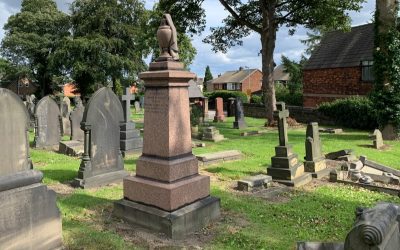
The Cemetery
Burials from the parish church of St Peter & St Leonard have taken place here since the mid 19th Century. It was taken over by Horbury Urban District Council in 1897 & gradually extended to include the lower levels. There are several graves of interest,...
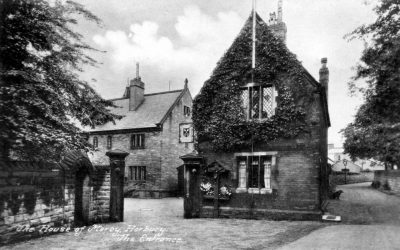
House of Mercy
The idea of establishing a place to house those who needed"rescuing from sin and destruction, the increasing multitude of fallen women", can be traced back to one person - Henrietta Louisa Farrer, later the wife of Rev. Henry Sidney Lear, Bishop of Salisbury....
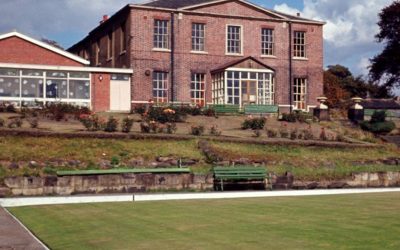
Horbury WMC
In 1894 it was decided to form a Working Men's Club in Horbury. It's first location was at the top of New Street. The first President and Steward were Messrs. Andrew Lambert and Squire Robinson. The Club was first registered and affiliated to the Working Men's Club...
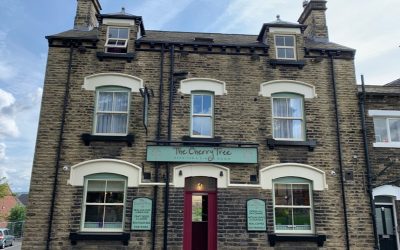
Cherry Tree Inn
The Cherry Tree Inn dates back to 1887. At the time, the licence application by the publican to sell beer and spirits was opposed by the vicar of Horbury, Canon John Sharp because of the proximity of the pub to St. Peter's Church. However, he was unsuccessful and the...
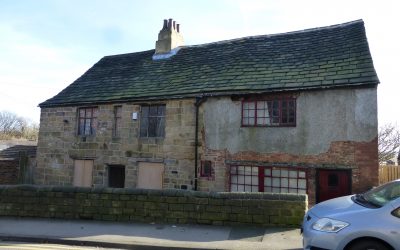
Horbury Hall
On Church Street facing the church’s south façade is Horbury Hall, a Grade 1 listed building, built on an earlier site for Ralph Amyas who was deputy steward of the Manor of Wakefield between 1478 and 1492. Horbury Hall is reputed to be the oldest building in Horbury....
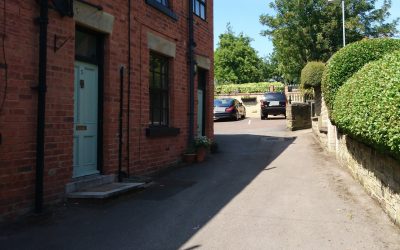
Hargreaves Yard & Penny Ginnels
Hargreaves Yard is a row of 3 brick & stone Victorian terraced cottages. At the top of the yard, to the right, is the entrance to the 'Penny Ginnels', believed to have been named after the 'penitentiary', or to be correct, the House of Mercy at the top of the set...
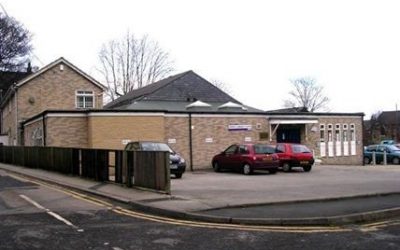
The Cluntergate Centre
Having undergone an extensive program of renovation in 2018, this building replaced Greenfield House, which stood on this site & was leased from Mr Oldroyd for use as the Trades & Labour Club & Institute, which began in 1914. When the house was demolished,...
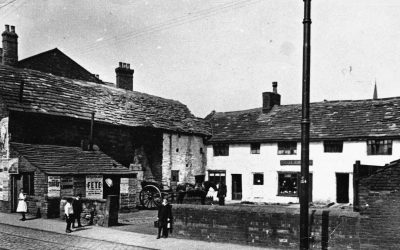
No.s 2, 10 & 12 High Street
No.2 High Street, now The Beauty Spa, was once the home of Henry Fallas, local builder & stonemason. Henry Fallas & Sons were responsible for some of the finest buildings in Horbury, notably the Town Hall, Library and United Methodist Church (now part of...